
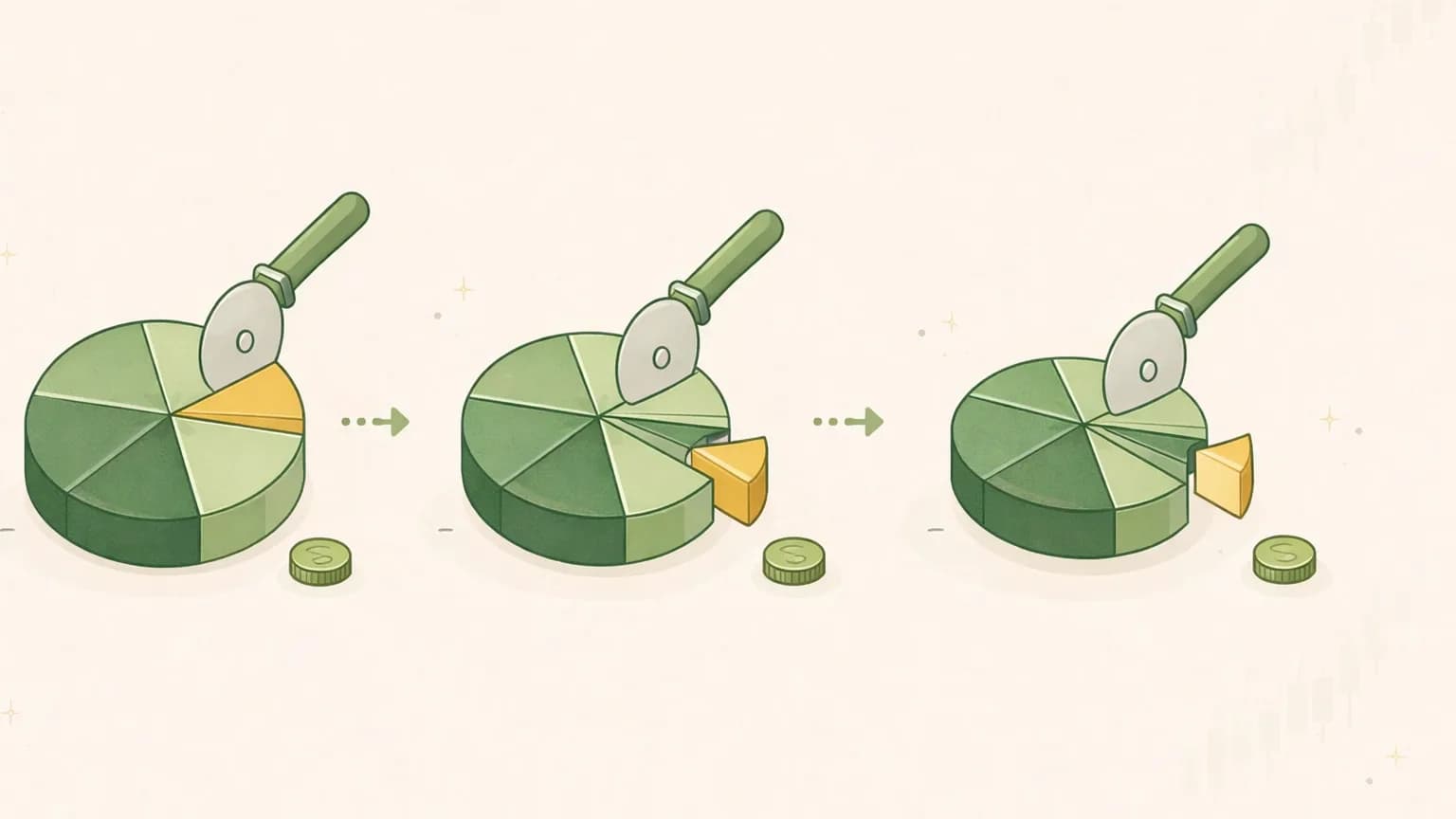
Stock Dilution Explained: How New Shares Reduce Your Ownership
You own a slice of a company when you own its stock. Not a fixed slice — a fraction, and the size of that fraction depends on how many total slices exist. Cut the pie into more pieces and everyone's piece gets smaller, even if the pie itself hasn't changed. That, in one sentence, is stock dilution.
This is one of the quietest ways your ownership erodes, because it rarely makes headlines. A company issues new shares, the total count creeps up, and your same number of shares now represents a little less of the business than it did last quarter. Nothing was taken from your brokerage account. Your claim on the company just got thinner.
Here's stock dilution explained from the ground up: where new shares come from, how to spot dilution in the numbers, why per-share figures matter far more than the totals companies love to headline, and whether buybacks actually cancel it out. The goal isn't a verdict on any stock — it's teaching you to read a share count so it can't quietly work against you.
What dilution actually is#
Dilution is the reduction in each existing shareholder's ownership percentage when a company increases its total number of shares outstanding. The key word is percentage. You can hold the exact same 500 shares for a decade and steadily own less of the company, purely because the denominator kept growing.
A simple illustration (numbers chosen for clean math, not from any real company):
- A company has 100 million shares outstanding. You own 1 million of them — a 1.0% stake.
- The company issues 25 million new shares. Total is now 125 million.
- Your 1 million shares haven't changed. But 1,000,000 ÷ 125,000,000 = 0.8%. Your ownership fell by a fifth without you selling a thing.
That's the mechanical heart of it. Every claim you have on the company — your slice of its profits, its cash flow, its assets, and your vote — is measured against total shares. Grow the total, and your slice shrinks proportionally.
Dilution isn't automatically bad, which is the part most explanations skip. If a company issues 25% more shares and uses the money to grow the business by 50%, each remaining share is backing a bigger, more valuable enterprise. The question is never "did dilution happen?" It's "what did shareholders get in exchange for it?" Sometimes the trade is worth it. Sometimes you paid for nothing.
Where new shares come from#
Dilution isn't one event; it's a category. Several distinct mechanisms all end in the same place — more shares outstanding. Knowing which one is at work tells you a lot about whether it's a healthy trade or a warning sign.
| Source | What happens | What it usually signals |
|---|---|---|
| Secondary offering | The company sells a new batch of shares to the public for cash | Raising money — could be for growth, or to plug a hole |
| Stock-based compensation | Employees are paid in shares and options that convert to stock | Normal at many firms; a red flag when it's large and relentless |
| Convertible debt | Bonds that can convert into shares at a set price | Cheaper borrowing now, potential dilution later |
| Warrants | Contracts giving the holder the right to buy new shares at a fixed price | Common in SPAC deals and financings; dilution triggers if exercised |
| Stock-funded acquisitions | The company pays for another business by issuing its own shares | Growth by purchase, paid for with your ownership |
Secondary offerings#
The most direct form. The company prints new shares and sells them into the market for cash. What matters is the why. Money raised to fund a genuine expansion, an R&D push, or an opportunistic land-grab can be money well spent. Money raised because the business is burning cash and needs to survive is a different story — and repeated offerings from an unprofitable company are one of the more reliable warning signs on the market. It's worth checking whether a company is issuing shares because it wants to or because it has to.
Stock-based compensation#
Paying employees in equity is standard practice, especially in tech, and it can align staff with shareholders. But it's real dilution with a friendly name. Every restricted stock unit that vests and every option that gets exercised adds to the share count. Modest, steady stock comp is a normal cost of doing business. Stock comp that grows faster than revenue, year after year, is shareholders quietly footing an enormous payroll bill in ownership rather than cash. Because it's easy to under-appreciate, we gave it its own deep dive: stock-based compensation explained.
Convertible debt and warrants#
These are dilution on a delay. Convertible bonds let a company borrow at a lower interest rate in exchange for giving lenders the option to convert their debt into shares later. Warrants work similarly — they're the right to buy newly issued shares at a set price. Neither dilutes anyone the day it's signed. But if the stock rises past the conversion or exercise price, those instruments turn into new shares, and the count jumps. This is exactly why the share count you see today can understate what's coming.
Stock-funded acquisitions#
When a company buys another business by issuing its own stock instead of paying cash, existing owners are handing over a piece of their company to fund the deal. This can be perfectly sensible — or it can be a management team using an inflated share price as currency to look bigger. The test is the same as always: did the acquired business add more value than the ownership you gave up to get it?
Basic vs. diluted share count#
Open a company's financials and you'll see two share counts, and the gap between them is one of the most useful things to notice.
- Basic shares outstanding counts the shares that actually exist right now.
- Diluted shares outstanding counts those plus everything that could reasonably become a share — unexercised options, unvested stock units, convertible bonds, and warrants. It's the "what if everything converts" number.
Companies report both because accounting rules require it, and the diluted figure is the more honest picture of your real, fully-loaded claim on the business. A small gap between basic and diluted means limited hidden dilution waiting in the wings. A wide gap means there's a large overhang of potential shares that will land on existing owners if those instruments convert.
How to read it: compare the two counts, and watch the trend over several years. A diluted count that keeps climbing faster than the business grows is dilution in motion. This is also why earnings-per-share is almost always quoted on a diluted basis — it bakes in that future dilution rather than flattering the number. If EPS is unfamiliar territory, start with earnings per share explained, then come back; the two ideas are tightly linked.
لماذا تتفوق مقاييس السهم الواحد على الإجماليات#
هنا الفخ الذي تضعه التخفيف، وهو يصطاد الكثير من الناس.
يمكن أن تنمو شركة ما في الإيرادات الإجمالية والأرباح الإجمالية والتدفق النقدي الإجمالي كل عام — ومع ذلك يمكن أن يصبح المساهمون فيها أفقر لكل سهم، لأن عدد الأسهم نما بشكل أسرع. العنوان يقول "إيرادات قياسية". لكن الواقع، على الأساس الوحيد الذي يهم أنت كمالك من بين العديد، يمكن أن يكون تراجعًا.
لهذا السبب يقوم المحللون المخضرمون بشكل غريزي بتحويل الإجماليات إلى أرقام لكل سهم: الأرباح لكل سهم، التدفق النقدي الحر لكل سهم، الإيرادات لكل سهم، القيمة الدفترية لكل سهم. الأرقام لكل سهم تأخذ في الاعتبار التخفيف تلقائيًا، لأن عدد الأسهم موجود هناك في المقام. يمكن أن تخفي الإجماليات ذلك. لكن أرقام السهم الواحد لا يمكنها.
توضيح (مرة أخرى، أرقام وهمية نظيفة):
- السنة 1: تحقق الشركة 100 مليون دولار من الأرباح على 100 مليون سهم. هذا يعني 1.00 دولار من الأرباح لكل سهم.
- السنة 2: تنمو الأرباح إلى 110 مليون دولار — زيادة حقيقية بنسبة 10%. لكن الشركة أيضًا أصدرت أسهمًا، والعدد الآن 125 مليون. الأرباح لكل سهم = 110M ÷ 125M = 0.88 دولار.
ارتفعت الأرباح الإجمالية 10%. لكن أرباحك لكل سهم انخفضت 12%. كلا الحقيقتين صحيحتان في آن واحد، وفقط واحدة منهما تظهر في البيان الصحفي. شركة تنمو في إجمالياتها بينما تتقلص أرقامها لكل سهم تشبه من يصعد على سلالم متحركة نازلة. نفس المنطق ينطبق على النقد: إذا كنت تقيم التدفق النقدي الحر، افعل ذلك لكل سهم — انظر شرح التدفق النقدي الحر لمعرفة لماذا يكون هذا الرقم صعب التزوير وسهل الاقتباس بشكل خاطئ.
العادة العملية: كلما رأيت شركة تحتفل برقم "إجمالي"، اسأل عما حدث لنفس الرقم لكل سهم. إذا كانت الإدارة تتحدث دائمًا في المجاميع ولا تتحدث أبدًا بمصطلحات لكل سهم، فهذا مؤشر يستحق الملاحظة.
هل تعوض عمليات إعادة الشراء التخفيف؟#
عمليات إعادة الشراء هي التخفيف بالعكس. عندما تعيد شركة شراء أسهمها الخاصة وتقوم بإلغاءها، فإن العدد الإجمالي ينخفض، لذا يمثل كل سهم متبقي شريحة أكبر قليلاً من العمل. نفس الفطيرة، قطع أقل.
الرياضيات المرتبة (توضيحية): شركة لديها 100 مليون سهم تعيد شراء 5 ملايين وتلغيها، مما يترك 95 مليون. إذا استمرت الأرباح عند 100 مليون دولار، فإن EPS يرتفع من 1.00 دولار إلى 100M ÷ 95M ≈ 1.05 دولار، فقط من المقام الأصغر. أنت الآن تملك جزءًا أكبر قليلاً من الشركة مما كنت عليه، دون شراء أي سهم إضافي.
لذا من حيث المبدأ، يمكن أن تعوض عمليات إعادة الشراء التخفيف. في الممارسة العملية، عليك التحقق مما إذا كانت تفعل ذلك بالفعل — وهذه هي النقطة التي تخيب فيها الكثير من الشركات مالكيها بهدوء:
- الصافي مقابل الإجمالي. يمكن لشركة أن تنفق مليارات على إعادة شراء الأسهم بينما لا تزال تسمح لعدد أسهمها بالارتفاع، لأن التعويض القائم على الأسهم يصدر أسهمًا جديدة أسرع من إلغاء عمليات الشراء القديمة. إعادة الشراء لا تكافئك؛ إنها فقط تمسح التخفيف الناتج عن دفع الموظفين. دائمًا انظر ما إذا كان عدد الأسهم قد انخفض بالفعل — وليس فقط الدولارات المنفقة على إعادة الشراء.
- السعر المدفوع. يمكن أن يؤدي شراء الأسهم عندما تكون باهظة الثمن إلى تدمير القيمة حتى مع خفض العدد. إعادة الشراء هي استخدام جيد للنقد فقط إذا تم شراء الأسهم بأقل من قيمتها.
هناك تفاصيل حقيقية هنا، وغالبًا ما تكون قصة إعادة الشراء عكس ما يوحي به العنوان. نحن نفصلها بالكامل في شرح عمليات إعادة شراء الأسهم. النسخة القصيرة لأغراض التخفيف: لا تفترض أن إعادة الشراء تعوض التخفيف — تحقق من ذلك مقابل عدد الأسهم المخفف.
كيفية التحقق من التخفيف في أي شركة#
لا تحتاج إلى أدوات خاصة للقيام بذلك. بضع دقائق مع ملفات الشركة تغطي ذلك:
- اسحب عدد الأسهم على مدى 3-5 سنوات. هل هو ثابت، يرتفع ببطء، أم يتصاعد بثبات؟ عدد ينمو بنسبة قليلة كل عام، عامًا بعد عام، يتراكم بهدوء ضدك.
- قارن الأساسي بالمخفف. فجوة واسعة ومتسعة تشير إلى وجود عدد كبير من الخيارات، القابلة للتحويل، والضمانات التي تنتظر التحويل.
- اقرأ خط التعويض القائم على الأسهم. هل هو متواضع، أم أنه جزء كبير ومتزايد من الإيرادات؟
- تحقق من القابلة للتحويل والضمانات في الملفات — التخفيف المستقبلي الذي ليس في العدد الأساسي الحالي بعد.
- حوّل القصة إلى مصطلحات لكل سهم. هل نمت الإيرادات والأرباح والتدفق النقدي الحر لكل سهم فعليًا، أم فقط الإجماليات؟
حيث يقوم مكتب الأبحاث بالعد من أجلك#
تتبع كل هذا يدويًا — عدد الأسهم عبر السنوات، الفجوة بين الأساسي والمخفف، اتجاهات تعويض الأسهم، القابلة للتحويل المدفونة، التحويلات لكل سهم — هو بالضبط نوع العمل غير اللامع، السهل التخطي الذي يعتمد التخفيف على تخطيه.
تم بناء Valarn للقيام بذلك كأداة بحث تعليمية. بدلاً من أن يقدم لك ذكاء اصطناعي واحد فقرة واثقة، فإنه يشغل حوالي 25 محللاً متخصصًا عبر مجالات مثل الجودة المالية، التدفق النقدي، التقييم، والملكية — كل منهم يستجوب شريحة واحدة من الشركة. ينظر محللو الجودة المالية والتدفق النقدي بشكل خاص إلى اتجاهات عدد الأسهم، التعويض القائم على الأسهم، وما إذا كانت مقاييس السهم الواحد تواكب الإجماليات، بدلاً من أخذ "الإيرادات القياسية" في ظاهرها. يمكنك رؤية كيف يقرأ ذلك على شركة حقيقية في تقرير بحثي عينة كامل، أو توجيه نفسك على أي رمز من صفحة بحث الشركة.
كل ادعاء واقعي — بما في ذلك أعداد الأسهم — يمكن تتبعه إلى ملف بتاريخ محدد، ويقوم المحللون بإجراء مناظرة منظمة بين الثيران والدببة قبل دمج وجهة نظر بحثية محايدة واحدة (متفائلة، متفائلة بحذر، محايدة، حذرة، أو متشائمة — لا تعليمات شراء أو بيع أبدًا). يحمل كل تقرير درجة ثقة من 0 إلى 100 تعكس جودة البيانات، وليس توقع سعر، وتتم عملية فحص الجودة قبل أن يصل أي شيء إليك. إذا كان هناك مصطلح يربكك على طول الطريق، فإن قاموس Valarn يعرّفه بلغة بسيطة. عندما تريد رؤيته على شركة تهمك، يمكنك إجراء تقرير بحث مجاني خاص بك.
الخلاصة#
التخفيف هو التسرب البطيء في ملكية الأسهم. نادرًا ما يعلن عن نفسه، ويختبئ خلف الأرقام "الإجمالية" المتزايدة، ويمكن أن يحول شركة تنمو حقًا إلى صفقة أفقر لكل مالك فردي. الدفاع بسيط في صياغته وسهل النسيان: راقب عدد الأسهم، انتبه للفجوة بين الأساسي والمخفف، واحكم على كل شيء على أساس لكل سهم بدلاً من الإجماليات في العنوان.
افعل ذلك، وستعمل تقسيمات الفطيرة لصالحك بدلاً من ضدك — لأنك ستلاحظ فعليًا عندما تصبح شريحتك أرق، وستعرف أن تسأل عما حصلت عليه في المقابل.
Valarn هي أداة بحث تعليمية، وليست نصيحة استثمارية. لا تخبرك بشراء أو بيع أو الاحتفاظ بأي شيء، ولا شيء هنا هو توصية أو وعد بالنتائج. دائمًا قم بإجراء بحثك الخاص واعتبر استشارة محترف مالي مرخص.
Valarn
Research
Valarn Research Team

Try Valarn for free
Run AI-powered analysis on any stock — typically 5–20 minutes per report.